
Qatar Cyber Security Framework Compliance
NIA Certification in Qatar: 5 Best Steps for NCSA Success
Achieving NIA Certification in Qatar is the ultimate validation of an organization’s commitment to national security standards. As the National Cyber Security Agency (NCSA) tightens regulations, achieving QCSF Compliance has become a mandatory requirement for critical infrastructure, government-linked entities, and private sector partners across Doha and Lusail.
At Compliance Wing, we bridge the gap between complex regulatory mandates and your day-to-day business operations. Our expert consultants ensure you meet the National Information Assurance (NIA) standards with confidence, transforming regulatory hurdles into a competitive advantage in the Qatari market.
We focus not only on meeting regulatory requirements but on strengthening your overall cyber resilience. By aligning with QCSF, your organization enhances operational reliability, reduces cyber risk exposure, and demonstrates commitment to Qatar’s national cybersecurity strategy.
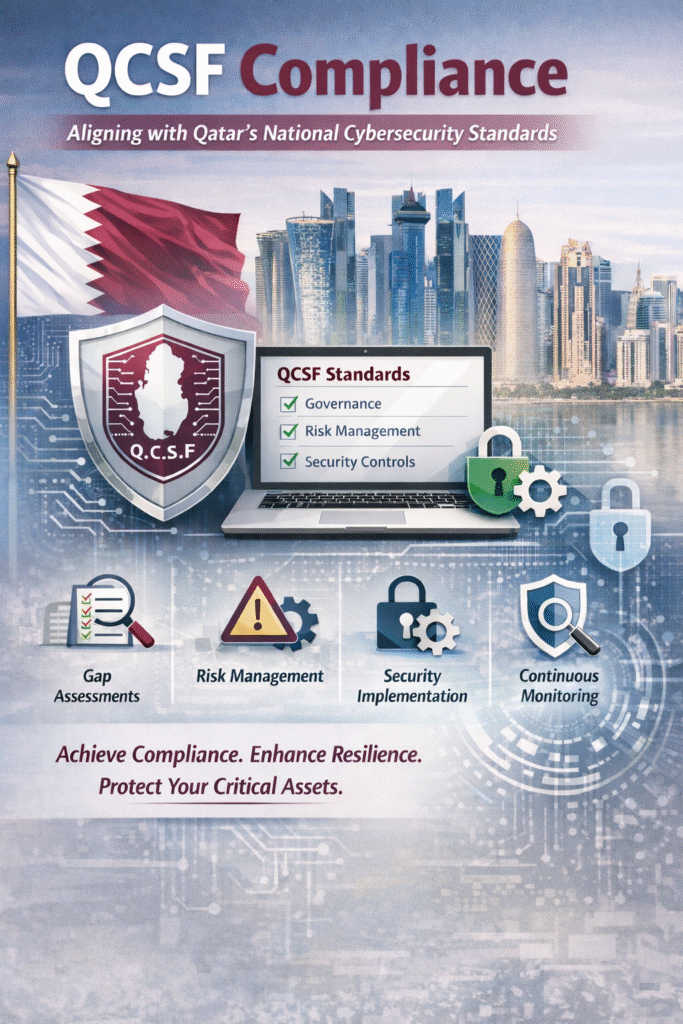
Our 5 Step Approach to NIA Certification in Qatar
Our structured methodology is designed to take the guesswork out of your Information Security Audit in Doha. We follow a proven roadmap to ensure your organization is fully prepared for official certification.
1. Comprehensive QCSF Gap Assessment
Every project begins with a baseline. Our team conducts a comprehensive gap assessment against QCSF requirements to provide a clear, color-coded roadmap of exactly what needs to be improved. We identify critical vulnerabilities in your current framework to ensure your path to compliance is efficient and cost-effective.
2. Evaluation of Governance and Risk Management
We perform a detailed evaluation of governance, risk management, and security controls. This phase is crucial for ensuring that your technical infrastructure is built on the NCSA’s best practices for NIA v2.1. We work with your leadership to establish clear accountability and a culture of security throughout the organization.
3. Identification and Remediation of Compliance Gaps
We don’t just find problems; we fix them. Our process includes the identification and remediation of compliance gaps before they become liabilities during an official audit.
4. Implementation Support for Security Controls
We provide hands-on implementation support for technical and organizational controls. From access management to incident response protocols, our consultants work alongside your IT department. We ensure every piece of evidence is regulator-ready for the formal NIA Certification in Qatar process.
5. Continuous Monitoring & Readiness Reviews
Certification is not a one-time event. We provide continuous monitoring and compliance readiness reviews to help you maintain your status. As cyber threats evolve within the Middle Eastern financial and energy sectors, we keep your framework updated and resilient.
3 Strategic Compliance Pillars
NCSA Regulatory Alignment
We ensure your internal policies and operational procedures directly reflect the latest circulars from the National Cyber Security Agency. Staying ahead of regulatory shifts helps avoid penalties and ensures your data protection measures meet the highest state standards.
Risk-Based Security Governance
Modern cybersecurity is moving beyond “check-box” compliance. We help you build a resilient security governance framework that identifies and protects your unique digital assets.
National Strategy Integration
We map your internal controls to the National Cyber Security Strategy 2024–2030. This ensures your organization supports Qatar’s vision for a secure, data-driven economy.
Why Choose Compliance Wing For NIA Certification in Qatar?
In a region where digital transformation is accelerating, having a partner who understands the local regulatory environment is vital. Compliance Wing specialize in translating the Qatar Cyber Security Framework into actionable business goals. Whether you are aiming for your first NIA Certification in Qatar or maturing your existing security governance, we provide the technical depth and strategic insight required for success.
Achieve regulatory alignment. Strengthen security governance. Protect critical digital assets with confidence.