
Frequently Asked Questions
Cloud Compliance FAQs
1. What is the difference between ISO 27017 and ISO 27018?
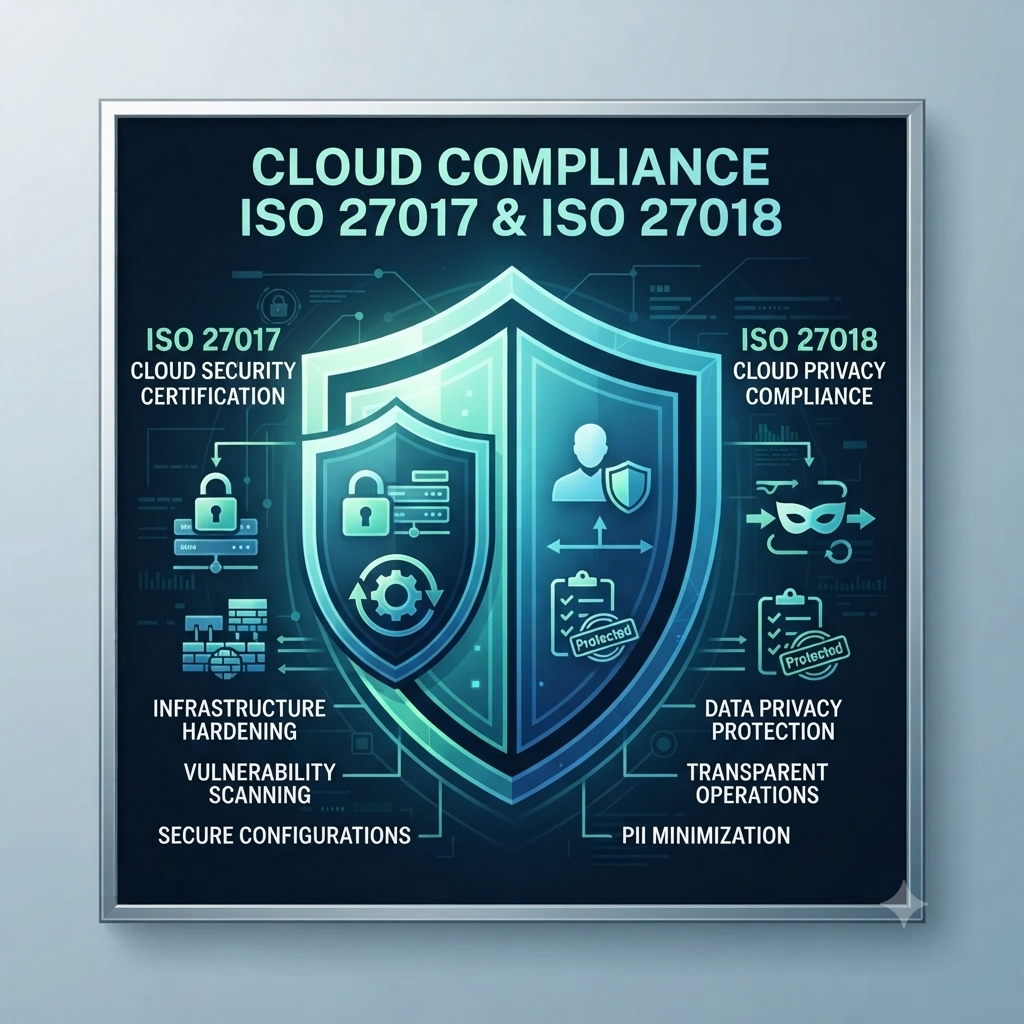
Essentially, ISO 27017 provides specialized security controls tailored specifically for cloud service providers and users. Conversely, ISO 27018 focuses exclusively on the protection of personally identifiable information (PII) within cloud environments. Therefore, implementing both ensures a comprehensive posture for both security and privacy.
2. Why is ISO 27017 cloud security certification necessary for my business?
It acts as a formal validation that your organization manages cloud risks effectively. Furthermore, achieving this certification demonstrates to clients that your infrastructure is hardened against emerging threats, which significantly enhances trust in your cloud-based service offerings.
3. How does ISO 27018 cloud privacy compliance protect my customers?
It establishes a rigorous framework for how personal data is handled, stored, and processed in the cloud. Consequently, it prevents unauthorized access to customer data and ensures that PII is not used for purposes outside of your client agreements, thereby reducing privacy-related legal risks.
4. Can Compliance Wing support multi-cloud infrastructure?
Yes, we specialize in securing complex multi-cloud and hybrid environments. Accordingly, we map your unique configurations to the required standards, ensuring that your compliance posture remains consistent across different cloud providers and on-premises systems.
5. Does this certification process require ongoing maintenance?
Absolutely. Maintaining compliance is not a static event. We integrate automated monitoring to ensure your controls remain active. Furthermore, we assist with recurring assessments so your certifications remain valid and your cloud infrastructure stays resilient against evolving security landscapes.
Secure Your Cloud Future
Ready to scale with confidence? Ensure your virtual infrastructure is compliant and protected today by visiting the official ISO 27017 overview for more technical details.